
The Strategic Role of FPV Drones in the Ukraine Conflict
7/4/20266 min read


FPV Drones in Modern Warfare: Lessons from the Conflict in Ukraine
Introduction to FPV Drones in Warfare
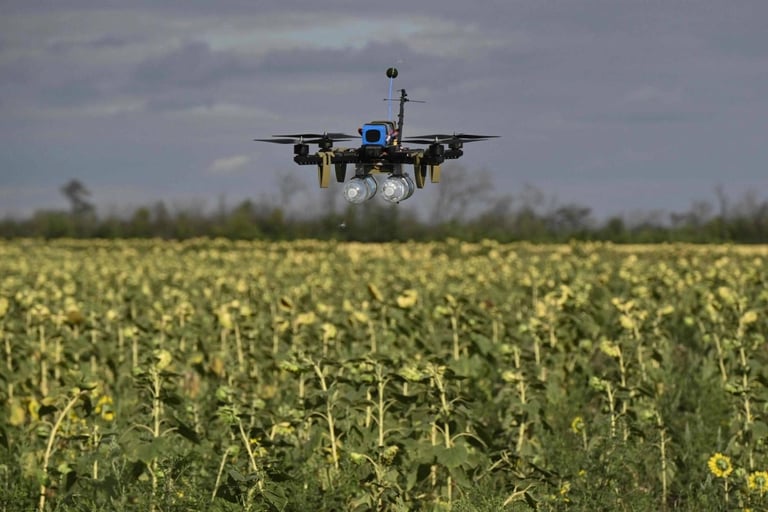
First-person view (FPV) drones have emerged as one of the most significant technological developments in modern warfare. Originally designed for recreational drone racing and aerial photography, these compact unmanned aerial vehicles (UAVs) have evolved into highly versatile tools that are now used for reconnaissance, intelligence gathering, target observation, and, in some military contexts, precision strike missions. The ongoing conflict in Ukraine has demonstrated how relatively inexpensive commercial drone technology can influence battlefield operations and reshape military tactics.
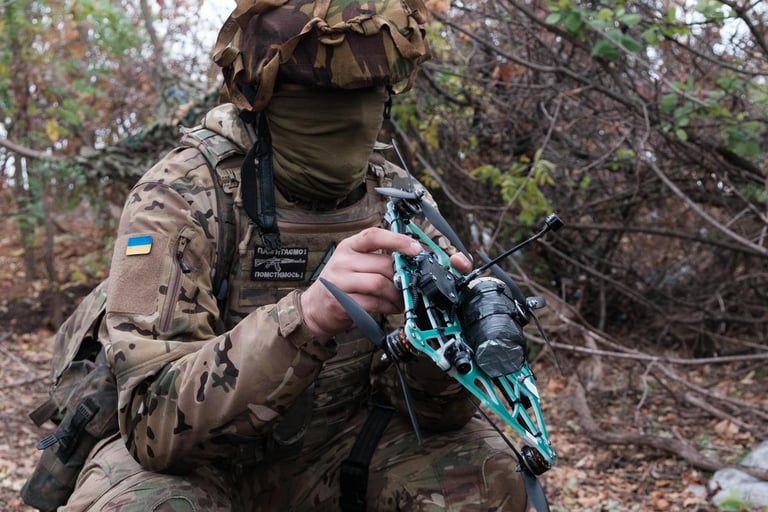
Unlike traditional military drones that often require sophisticated infrastructure and large budgets, FPV drones are lightweight, agile, and comparatively affordable. Operators control these drones using video goggles or display screens that transmit a live camera feed from the aircraft, creating an immersive "pilot's-eye view." This real-time perspective allows operators to navigate through buildings, forests, trenches, and other complex terrain with remarkable precision.
The widespread adoption of FPV drones in Ukraine has highlighted how rapidly commercial technology can be adapted for military applications. Their growing presence has influenced battlefield awareness, operational planning, and force protection, making them an increasingly important component of modern military operations.
What Makes FPV Drones Different?
FPV drones differ from conventional UAVs in several important ways. Traditional surveillance drones often prioritize long flight times and stable aerial observation. FPV drones, by contrast, are optimized for speed, maneuverability, and responsive control.
Key characteristics include:
High-speed flight capabilities
Low-altitude operation
Compact lightweight frames
High-definition real-time video transmission
Excellent maneuverability
Customizable components
Relatively low manufacturing costs
Rapid deployment in dynamic environments
Because of these features, FPV drones can navigate through narrow spaces, avoid obstacles, and operate in locations that would be difficult for larger aircraft to access.
The Role of FPV Drones in the Ukraine Conflict
The war in Ukraine has become one of the first major conflicts in which FPV drones have been used extensively on both sides. Their widespread availability and relatively low cost have enabled military units to deploy them for a variety of battlefield tasks.
FPV drones have been used to support:
Battlefield reconnaissance
Route observation
Situational awareness
Defensive monitoring
Search operations
Damage assessment after engagements
Infrastructure inspection
Observation of changing battlefield conditions
By providing real-time aerial imagery, FPV drones enable military personnel to observe terrain and monitor areas that may otherwise be difficult or dangerous to access directly.
Enhanced Situational Awareness
One of the greatest advantages of FPV drones is the improvement they bring to situational awareness.
Military commanders rely heavily on accurate, timely information when making tactical decisions. FPV drones can provide live aerial video of roads, defensive positions, terrain features, and areas of interest, allowing operators to gain valuable visual information without exposing personnel to unnecessary risk.
This ability to observe from above supports more informed planning and can improve coordination among units operating in rapidly changing environments.
Cost-Effective Technology
Another major factor behind the popularity of FPV drones is affordability.
Compared with traditional military aircraft and larger unmanned systems, many FPV platforms are assembled using commercially available components. This has significantly lowered the financial barrier to deployment.
Lower costs make FPV drones attractive for organizations seeking scalable aerial capabilities while minimizing procurement expenses. Their modular construction also allows damaged components to be repaired or replaced more easily than many larger UAV systems.
Rapid Deployment and Flexibility
Modern battlefields evolve quickly.
FPV drones can often be prepared for flight within minutes, allowing operators to respond rapidly to changing conditions.
Their compact size allows them to be transported in backpacks or small equipment cases, making them highly portable for personnel operating in the field.
This flexibility enables quick aerial observation whenever updated visual information is required.
Navigating Complex Terrain
Urban environments present unique challenges for military operations.
Buildings, narrow streets, damaged infrastructure, and limited visibility can make ground movement difficult.
FPV drones excel in these environments because operators receive a real-time camera view while flying. This perspective enables precise navigation through obstacles and confined spaces that larger aerial platforms may struggle to access.
Similarly, wooded areas, river crossings, trenches, and mountainous terrain can often be surveyed more effectively using agile FPV systems.
Intelligence, Surveillance, and Reconnaissance
Intelligence collection remains one of the most important applications of unmanned aircraft.
FPV drones contribute to Intelligence, Surveillance, and Reconnaissance (ISR) missions by providing live visual information that supports operational awareness.
Common ISR applications include:
Monitoring movement in an area of interest
Observing infrastructure conditions
Identifying terrain obstacles
Assessing road accessibility
Supporting search missions
Monitoring defensive positions
Recording aerial footage for later analysis
The availability of immediate visual information can improve decision-making while reducing uncertainty during operations.
Rapid Technological Innovation
The conflict has also accelerated innovation.
Manufacturers and drone builders continuously improve components such as:
Flight controllers
Brushless motors
Electronic speed controllers
Video transmitters
HD cameras
Radio communication systems
Antenna designs
Battery technology
These improvements continue to increase flight performance, image quality, reliability, and operational endurance.
Electronic Warfare Challenges
Although FPV drones offer many operational advantages, they are also vulnerable to electronic warfare.
Radio interference and signal disruption can reduce operational effectiveness.
Potential challenges include:
GPS disruption
Radio frequency interference
Video transmission degradation
Signal blocking
Communication interruptions
As electronic warfare technologies continue to evolve, drone developers are researching improved communication systems and alternative navigation methods that may increase resilience in contested electromagnetic environments.
Weather and Environmental Factors
Weather conditions significantly affect drone performance.
Strong winds, heavy rain, snow, fog, and extreme temperatures can reduce flight stability, battery efficiency, and video quality.
Environmental obstacles such as dense forests, buildings, and mountainous terrain may also interfere with radio communication or limit line-of-sight operation.
Careful mission planning remains essential to ensure safe and effective drone operations.
Operator Training and Skill Development
Technology alone does not guarantee successful drone operations.
Experienced pilots develop advanced skills through extensive practice and training.
Important competencies include:
Precise manual flight control
Situational awareness
Navigation
Battery management
Emergency recovery procedures
Equipment maintenance
Radio communication management
Professional training helps improve operational safety while maximizing the capabilities of modern FPV platforms.
Continuous Evolution of Drone Technology
FPV technology continues to advance rapidly.
Recent developments include:
Higher-resolution digital video systems
Lower-latency transmission
Improved battery performance
More efficient propulsion systems
Lightweight composite materials
Artificial intelligence-assisted flight features
Enhanced obstacle sensing
More reliable communication hardware
Many of these innovations originated in commercial drone racing and aerial cinematography before finding broader applications across multiple industries.
Broader Civilian Applications
Although FPV drones have gained attention because of their use in armed conflicts, it is important to recognize that they also have many legitimate civilian applications.
Around the world, FPV drones are widely used for:
Professional aerial cinematography
Drone racing
Search and rescue support
Infrastructure inspections
Industrial surveys
Agricultural monitoring
Construction progress documentation
Environmental research
Educational robotics projects
Technical engineering development
These peaceful uses continue to drive innovation across the drone industry and contribute to improvements in flight technology, imaging systems, and autonomous navigation.
Ethical and Humanitarian Considerations
The increasing use of drones in conflict has generated important discussions among governments, military experts, legal scholars, and humanitarian organizations.
Topics frequently discussed include:
Protection of civilians
Compliance with international humanitarian law
Responsible military use of emerging technologies
Accountability in drone operations
Privacy concerns
Future regulation of autonomous systems
As drone capabilities continue to evolve, policymakers around the world are examining how existing legal frameworks should adapt to new technologies while maintaining humanitarian protections.
The Future of FPV Drones
The rapid pace of technological development suggests that FPV drones will continue to evolve.
Future improvements may include:
Longer flight endurance
Better energy efficiency
Enhanced digital communication systems
More advanced onboard sensors
Improved obstacle avoidance
Greater resistance to electronic interference
AI-assisted navigation features
Enhanced imaging technologies
At the same time, advances in counter-drone systems, electronic defense, and detection technologies are likely to influence how unmanned aircraft are used in future operational environments.
Conclusion
The conflict in Ukraine has demonstrated the growing importance of FPV drones as adaptable, affordable, and highly capable unmanned aerial systems. Their use for reconnaissance, battlefield observation, and situational awareness illustrates how commercial drone technology can influence modern military operations. At the same time, the conflict has highlighted challenges such as electronic interference, environmental limitations, operator training requirements, and the broader ethical questions surrounding the use of unmanned systems in warfare.
Beyond military applications, FPV drones continue to play an increasingly valuable role in civilian industries, including filmmaking, engineering, agriculture, infrastructure inspection, research, and emergency response. Ongoing advances in batteries, communications, sensors, and flight control technology will continue to expand their capabilities across many sectors.
As drone technology develops further, FPV platforms are expected to remain an important area of innovation, influencing both civilian industries and the evolving landscape of modern unmanned aviation.
Social Media
Contact
Newsletter
+856 20 97 510 070
© 2026. All rights reserved.