
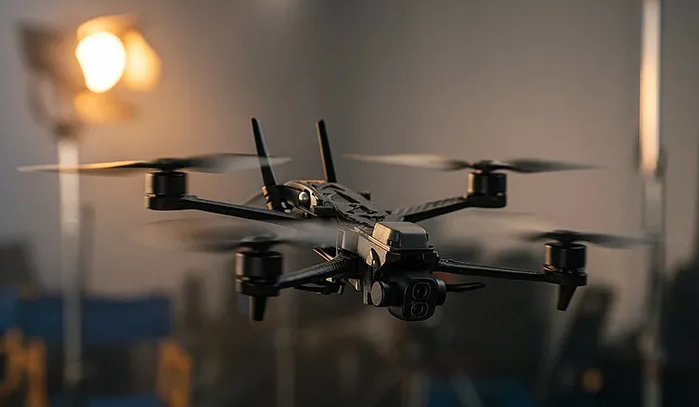
Drone Industry Continues Rapid Global Growth
The global drone industry continues to expand as governments and private companies invest in new unmanned technologies. Drones are being used for infrastructure inspections, agriculture, emergency response, mapping, and aerial photography.
Global Drone Industry Update – July 2026
The global drone industry continues to evolve at an impressive pace, transforming from a niche aviation technology into one of the fastest-growing sectors of the modern economy. Governments, technology companies, research institutions, and commercial operators are investing heavily in unmanned aerial systems (UAS), recognizing their potential to improve efficiency, enhance safety, and create new business opportunities across a wide range of industries.
Recent developments highlight continued investment in drone innovation, stronger efforts to improve airspace security, and growing educational programs designed to prepare the next generation of drone professionals. At the same time, advances in artificial intelligence (AI), autonomous flight systems, high-resolution imaging, battery technology, and communications networks are enabling drones to perform increasingly complex missions with greater accuracy and reliability.
As adoption continues to expand worldwide, regulators are also working to ensure that innovation develops alongside responsible operational standards. The future of the drone industry will depend not only on technological progress but also on effective regulation, public acceptance, and continued collaboration between governments and private industry.
Europe Expands Drone Defense Cooperation
European governments continue to strengthen cooperation in the development of drone and counter-drone technologies. Recent proposals encourage participating nations to work together on research, product development, and future procurement programs that improve interoperability between defense forces while supporting Europe's aerospace industry.
The initiative reflects a broader strategy of increasing collaboration on advanced defense technologies. Rather than each nation independently developing similar capabilities, joint programs may reduce costs, accelerate innovation, and improve compatibility between equipment used by allied countries.
Counter-drone technology has become an especially important area of investment. As drones become increasingly common in both military and civilian environments, governments are investing in systems capable of detecting, tracking, identifying, and responding to unauthorized aircraft. These systems often combine radar, radio-frequency monitoring, electro-optical sensors, artificial intelligence, and electronic countermeasures to provide multiple layers of protection.
Industry analysts believe that collaborative research programs could accelerate the development of next-generation unmanned aircraft while strengthening Europe's position within the global aerospace market.
United States Creates New Drone Management Office
The United States continues to modernize its approach to unmanned systems through improved coordination of research, development, and operational planning. A centralized management office has been established within the Department of Defense to oversee a broad portfolio of unmanned technologies, including aerial drones, autonomous ground vehicles, maritime systems, and counter-drone capabilities.
Officials say the new structure is designed to improve cooperation among military branches while reducing duplication across various development programs. By coordinating projects through a centralized organization, defense planners hope to accelerate innovation and improve the transition of new technologies from research laboratories into operational service.
Artificial intelligence is becoming an increasingly important component of military drone operations. Modern systems can assist with navigation, obstacle avoidance, sensor analysis, target recognition, and mission planning while reducing operator workload. Although human oversight remains essential for critical decisions, AI continues to improve operational efficiency across many applications.
Cybersecurity also remains a major priority. As drone systems become more connected, protecting communications networks from cyberattacks, electronic interference, and signal spoofing is increasingly important for maintaining operational reliability.
Commercial Drone Applications Continue to Expand
Outside the defense sector, commercial drone adoption continues to accelerate across numerous industries. Businesses are discovering that drones can perform inspections, collect accurate data, and improve workplace safety while reducing operational costs.
Construction companies regularly use drones to monitor building progress, generate high-resolution site maps, and produce three-dimensional models that help engineers identify potential issues early in a project. Regular aerial surveys also improve communication between contractors, architects, and project managers.
Energy providers use drones to inspect power transmission lines, wind turbines, solar farms, pipelines, and offshore facilities. Thermal cameras and zoom lenses allow maintenance teams to identify damaged components without requiring personnel to work in hazardous locations.
Mining companies have adopted drone mapping technology to calculate stockpile volumes, monitor excavation progress, and improve environmental compliance. Frequent aerial surveys provide highly accurate data that supports planning and operational decision-making.
Insurance providers increasingly deploy drones following severe storms, floods, and wildfires to document property damage more quickly and safely than traditional inspection methods.
These examples demonstrate how drones have evolved into practical business tools rather than simply aerial cameras.
Agriculture Leads Commercial Adoption
Agriculture remains one of the largest commercial markets for drone technology. Farmers use unmanned aircraft equipped with multispectral and thermal sensors to monitor crop conditions throughout the growing season.
Drone imagery helps identify irrigation problems, pest infestations, nutrient deficiencies, and plant diseases before they become widespread. Early intervention allows producers to improve crop health while reducing unnecessary use of water, fertilizers, and pesticides.
Precision spraying drones have also become increasingly popular in many regions. These aircraft can apply crop protection products with remarkable accuracy, reducing chemical waste while improving application efficiency.
Livestock producers benefit from drones that monitor grazing animals, inspect fencing, and survey large properties in a fraction of the time required for ground inspections. As flight endurance continues to improve, agricultural drone operations are expected to become even more efficient.
Aviation Authorities Continue Focus on Drone Safety
As drone activity increases around the world, aviation authorities continue updating regulations designed to maintain safe integration between unmanned aircraft and traditional aviation.
Protecting airports and controlled airspace remains a key priority. Authorities continue investigating reports of drones operating near commercial aircraft, even when investigations ultimately determine that no safety risk existed. Each report provides valuable information that helps regulators refine operational procedures and improve public awareness.
Many countries now require drone registration, pilot certification, and compliance with altitude limits or operational restrictions in sensitive areas. Manufacturers have also introduced technologies such as geofencing and remote identification to help prevent unauthorized operations.
Education remains one of the most effective methods of improving drone safety. Governments and aviation organizations regularly encourage both recreational and commercial pilots to understand local regulations before every flight.
Artificial Intelligence Shapes the Future
Artificial intelligence has become one of the most significant drivers of innovation within the drone industry. Modern software allows drones to process sensor information in real time, recognize objects, avoid obstacles, optimize flight paths, and perform increasingly autonomous missions.
Inspection companies use AI-powered image analysis to identify cracks, corrosion, and structural defects automatically. Environmental researchers employ machine learning algorithms to monitor wildlife populations, detect illegal logging, and analyze changes in forests and wetlands.
Emergency response agencies also benefit from intelligent image processing capable of locating survivors, identifying wildfire hotspots, and mapping disaster areas more rapidly than manual analysis.
Researchers continue improving AI reliability while ensuring that appropriate human oversight remains central to mission-critical operations.
Education and Workforce Development
Educational institutions continue expanding drone-related training programs to prepare students for careers in aviation, robotics, engineering, agriculture, surveying, emergency response, and data analysis.
Many universities and technical colleges now offer specialized courses covering drone operations, aviation law, flight planning, aerial mapping, maintenance, software development, and sensor technologies. Students often gain practical flight experience alongside classroom instruction, providing valuable hands-on skills that employers increasingly seek.
Industry partnerships allow students to participate in internships, research projects, and technology demonstrations that expose them to real-world commercial applications.
As demand for qualified drone professionals continues to grow, workforce development will remain an important factor supporting industry expansion.
Environmental and Humanitarian Applications
Drones are also making important contributions beyond commercial and defense sectors. Conservation organizations deploy unmanned aircraft to monitor wildlife, map ecosystems, and detect illegal poaching or unauthorized deforestation.
Following natural disasters such as floods, earthquakes, and wildfires, emergency responders use drones to rapidly assess damage, identify blocked transportation routes, and support search-and-rescue operations. High-resolution aerial imagery enables emergency managers to prioritize resources more effectively while improving responder safety.
Scientists continue using drones to study glaciers, coastlines, volcanoes, forests, wetlands, and marine environments. Their ability to safely collect detailed information from difficult-to-access locations has made drones valuable research tools across many scientific disciplines.
Looking Ahead
The long-term outlook for the global drone industry remains highly positive. Continuous improvements in battery technology, autonomous navigation, lightweight materials, communications systems, and artificial intelligence are expected to unlock new commercial opportunities across virtually every sector of the economy.
Governments will continue balancing technological innovation with responsible regulation, ensuring that drones can safely share increasingly busy airspace with conventional aircraft. International cooperation on standards and operational procedures may further encourage global adoption while supporting cross-border commercial operations.
Businesses are expected to increase investment in drone technology as equipment becomes more affordable, reliable, and capable. At the same time, research into cybersecurity, counter-drone systems, and advanced air traffic management will remain essential for supporting safe long-term growth.
From agriculture and infrastructure inspection to logistics, emergency response, environmental protection, filmmaking, scientific research, and public safety, drones are steadily becoming indispensable tools across modern society. Continued collaboration between governments, industry leaders, researchers, and educational institutions will shape the next generation of unmanned aviation, ensuring that drone technology continues delivering practical benefits for businesses, communities, and people around the world.
Social Media
Contact
Newsletter
+856 20 97 510 070
© 2026. All rights reserved.